WHICH WINE WOULD YOU LIKE TO TASTE
Full list, recommended for experts
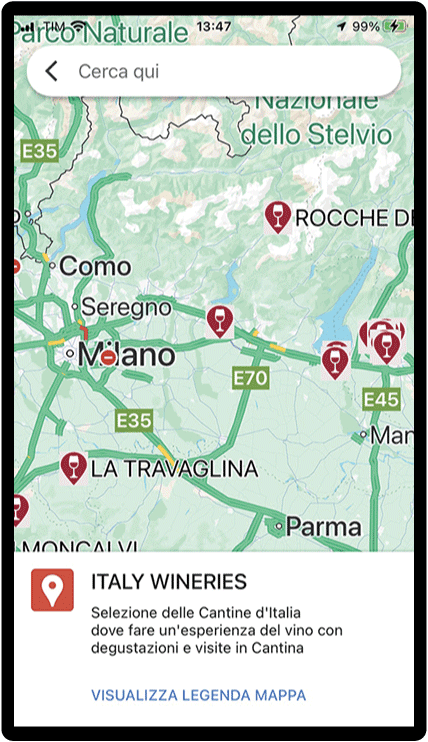
Franciacorta, Oltrepò Pavese, Garda, Lugana, San Martino della Battaglia, Valcamonica
Recommended CITIES
Wine tasting Brescia- Brescia Wineries -Wine tasting Mantova - Mantova Wineries -Wine tasting Pavia- Pavia Wineries - Wine tasting Sondrio - Sondrio Wineries
Recommended WINE-GROWING AREAS
Wine tasting Franciacorta - Franciacorta Wineries - Wine tasting Lago D'Iseo - Lago D'Iseo Wineries Wine tasting Lugana - Lugana Wineries - Wine tasting Garda- Wine tasting Oltrepò Pavese - Oltrepò Pavese Wineries - Wine tasting Valcamonica - Valcamonica Wineries - Wine tasting Valtellina - Valtellina Wineries
Viticulture in Lombardy has origins even in prehistory. However, it was during the Roman era that the cultivation of vines received a great boost in terms of progress in production methods.
Lombardy Wineries production is characterized by a high quality of wines. The cultivation of these vines is divided into 41% in the mountains, 12% in the hills and the remaining 47% in the plains, in areas which are therefore very different from them
In LOMBARDY there are 5 DOCG, 22 DOC and 15 IGT.
Lombard viticulture has always been characterized by a great diversification of production areas, which are distinguished by climatic and geographical conditions: a richness that extends from the terraced slopes of Valtellina, to the moraine areas of lakes Garda and Iseo, to reach the Apennine hills of the Oltrepo Pavese and the lower Po Valley.
In Lombardy, the soils have rather different pedoclimatic characteristics. Most of the hectares of vineyards are represented by red grapes, approximately 70%. The most cultivated grape variety in the region is Nebbiolo, followed by Pinot Noir, Chardonnay, Croatina, Barbera, Uva Rare, Marzemino, as well as the presence of other international vines.
THE PRODUCTION AREAS
Franciacorta develops in the surroundings of the province of Brescia
and is one of the most important areas of Italian sparkling wine, with the homonymous DOCG Franciacorta
Oltrepò Pavese extends into the province of Pavia
and includes the DOCG Oltrepò Pavese Metodo Classico, as well as various more or less important DOCs.
we find the denomination Valcamonica IGT which represents one of the most important wine-growing areas in the Lombardy region. The Valcamonica IGT denomination includes the provinces of Brescia and was created in 2003. The wines of the Valcamonica IGT denomination are mainly based on the Riesling, Müller-Thurgau, Marzemino, Merlot grape varieties.
In Valtellina we find: Sforzato di Valtellina
or Sfursat di Valtellina DOCG is the first of the denominations, whose wines are obtained from the vinification of pure Nebbiolo grapes.
The second DOCG is Valtellina superiore DOCG, whose wines are always obtained from the Nebbiolo grape (min. 90%), in this case not subjected to drying. The denomination includes five sub-zones, Valgella, Inferno, Grumello, Sassella and Maroggia. The Valtellina rosso DOC denomination is dedicated to the youngest wine always produced from the Nebbiolo grape (min. 90%)
The area of Garda lake, or rather its Brescian shore
sees the native Groppello vine, combined with Marzemino, Barbera and Sangiovese, as the basis of the local DOC red wines. Garda Doc Bianco is instead produced 70% from Italian Riesling grapes. On the southern shore of the lake, straddling the province of Verona, the area of the white wines of Lugana, based on the Trebbiano di Lugana vine, and of S. Martino della Battaglia, on the Tocai Friulano, a white grape variety also widespread in Veneto.
In the province of Mantova and along the border with Emilia Romagna, there is the production area of Lambrusco Mantovano. The basic grape variety is Lambrusco Viadanese, whose name derives from the municipality of Viadana, in the lower Mantua area, along the Po. Alongside it, other types of Lambrusco such as Salamino, Sorbara, Grasparossa and others are also grown.
Cellars of the other regions of Italy:
Tuscany, Piedmont, Veneto, Umbria, Friuli Venezia Giulia, Marche