
The province of Grosseto produces top-quality wines, including reds, whites, rosés, passitos, Vin Santo, late harvest wines, and even sparkling wines, you can enjoy Wine Tasting Grosseto here. The high quality of the wines produced is primarily due to the unique climate, resulting from the close proximity of the sea, mountains, and hills. Winters are never too cold and summers are never excessively hot.
The province of Grosseto is also a land with a very ancient winemaking tradition, evidenced by the vineyards of Scansano, home to Morellino, and those of Pitigliano, from the seaside terraces of Giglio Island to the hills of medieval Massa Marittima.
In the province of Grosseto, we find one DOCG, seven DOCs, and two IGTs.
Morellino di Scansano DOCG
is reserved for wines produced with at least 85% Sangiovese grapes (locally called Morellino) and the remainder from other non-aromatic red grape varieties suitable for cultivation in the region. Tuscany, in the area encompassing the hilly area of the province of Grosseto between the Ombrone and Albegna rivers, including Riserva wines.
The Montecucco Sangiovese DOCG
is reserved for wines made with at least 90% Sangiovese grapes, in both the basic and Riserva versions. The production area falls within the southern part of Tuscany, specifically the eastern edge of the province of Grosseto, in a vast area stretching from the slopes of Mount Amiata to the last hills before the city of Grosseto, extending north and northeast to the border with the province of Siena, partly delimited by the Ombrone River and its tributary, the Orcia.
The Montecucco DOC. Its wines are produced as Bianco and Rosso, including “Riserva,” Rosé, and Vermentino, in addition to the traditional Vin Santo and Vin Santo Occhio di Pernice.
The Ansonica Costa dell’Argentario DOC
refers exclusively to wines made from the Ansonica grape. The DOC production area is hilly, with a southeast exposure, benefiting from the terrain’s openness to sea breezes that ensure good ventilation year-round.
The Bianco di Pitigliano DOC
covers the basic Bianco, Spumante, Superiore, and Vin Santo wines. The complementary white grape varieties used (up to 60%) are primarily Greco, Grechetto, Sauvignon, Viognier, and Chardonnay, in proportion to the Trebbiano Toscano (minimum 40%).
The Capalbio DOC
includes wines from Sangiovese, Trebbiano Toscano, Vermentino, and Cabernet Sauvignon, as well as other complementary grape varieties.
The Maremma Toscana DOC
features wines produced with traditionally grown local grape varieties: Sangiovese, Ciliegiolo, Canaiolo Nero, Alicante, Trebbiano Toscano, Ansonica, Malvasia Bianca Lunga, and Vermentino, alongside international varieties such as Merlot, Cabernet Sauvignon, Syrah, Chardonnay, Sauvignon Blanc, and Viognier, among others. The wines are both white and red, while the rosés are mostly made from the Sangiovese and Ciliegiolo varieties, and the Novello from the Sangiovese variety.
The Monteregio di Massa Marittima DOC
extends across a large, predominantly hilly area, from the border with the province of Livorno (to the northwest) to the south, almost touching the Tyrrhenian coast between Follonica and Castiglione della Pescaia. To the north, it borders the provinces of Pisa and Siena along the slopes of the Colline Metallifere.
The Parrina DOC
is limited to a small area in the hills northeast of Orbetello and includes part of the municipality of Orbetello.
The Sovana DOC
is located in a hilly and foothill area that includes the municipalities of Pitigliano and Sorano and part of the municipality of Manciano. The grape varieties include the native Sangiovese, Aleatico, and Ciliegiolo, and the international Cabernet Sauvignon and Merlot, as well as complementary varietals. The two IGTs present in the province of Grosseto
These are Costa Toscana IGT and Toscano or Toscana IGT, the former shared with the coastal provinces, the latter with all other provinces in the Tuscany region. These include wines produced with grape varieties authorized for cultivation in the Tuscany region, either as a blend or as a single varietal.
WINE TASTING GROSSETO
Click on the map and book your tasting
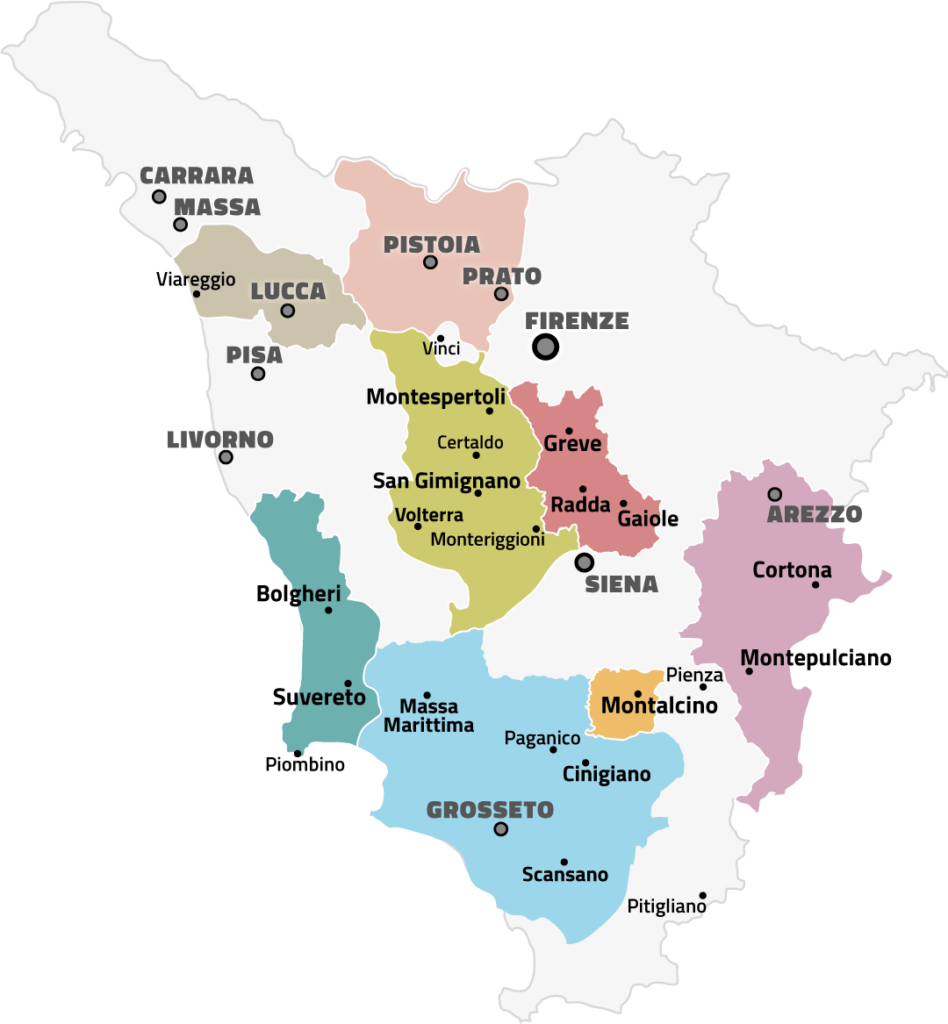
Choose the Wine and go to the Cellar
RED
In the suitable areas of the municipalities of Cinigiano, Civitella Paganico, Campagnatico, Castel del Piano, Roccalbegna, Arcidosso and Seggiano in the province of Grosseto, from Sangiovese grapes min.60%. From grapes suitable for cultivation in Tuscany max40%
In the town of Scansano and part of the municipalities of Manciano, Magliano in Toscana, Grosseto, Campagnatico, Semproniano and Roccalbegna, in the province of Grosseto, from Sangiovese grapes min.85%. From grapes suitable for cultivation in Tuscany max15%
Morellino di Scansano docg Riserva
After an aging of 2 years of which 1 in cask
WHITE and Rosè
in the province of Grosseto, from Sangiovese and/or Ciliegiolo min.40%; and from grapes suitable for cultivation in Tuscany max60%
In Tuscany, white Wine from Ansonica grapes


Visiting the cellars is definitely an experience not to be missed.

BOOK YOUR WINE TASTING GROSSETO
The wineries are ready to welcome you and offer you an unforgettable experience. Therefore, you can choose from various types of tastings, especially based on your needs. Wine tasting Maremma are an unforgettable wine tourism and food and wine experience. We look forward to seeing you at the winery.
See wineries in other regions of Italy:
Piedmont, Lombardy, Veneto, Umbria, Friuli Venezia Giulia, Marche